Cracked Garage Floor: When to Worry, How to Fix It, and What It Costs
Every concrete garage floor cracks. Learn which ones matter and what each repair costs.
The Garage Guide
Updated Mar 2026 · 22 min read
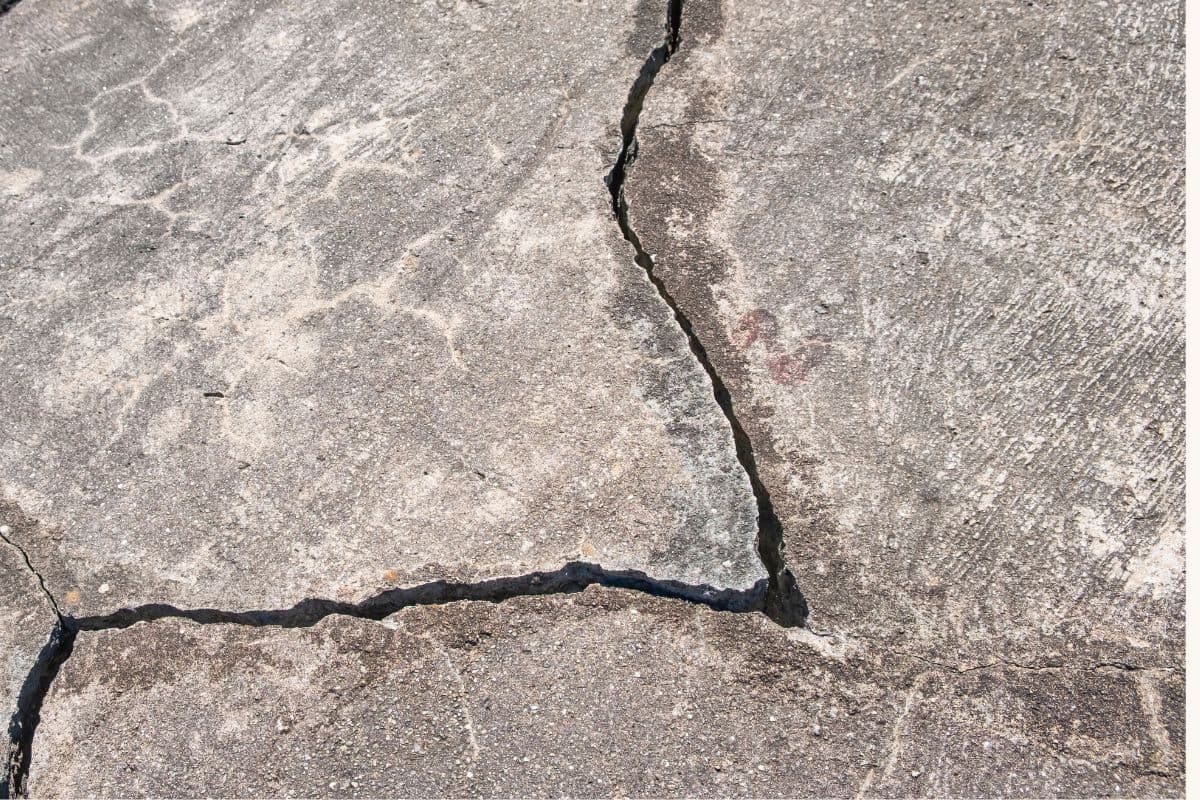
Every concrete garage floor cracks eventually. Concrete shrinks as it cures, expands and contracts with temperature changes, and settles as the soil beneath it shifts. The question is not whether your floor will crack. The question is whether the cracks you have are cosmetic — ignore or cheap fix — or structural — fix now before they get expensive.
This guide covers every type of garage floor crack, how to tell which ones matter, what each repair costs, and when it makes more sense to resurface or replace the floor entirely. If you are considering a floor coating to cover repaired cracks, see our garage floor coating cost guide and best epoxy kits.
Cosmetic vs Structural: How to Tell the Difference
This is the only thing that matters. Use this table to classify your cracks in 30 seconds.
| What You See | Type | Worry Level | What to Do |
|---|---|---|---|
| Hairline cracks under 1/8 inch wide, no height difference between sides | Shrinkage crack (cosmetic) | Low | Optional fill with concrete caulk for appearance. No structural concern. |
| Crack along a control joint (the scored lines in the floor) | Designed crack (intentional) | None | This is working as intended. The control joint exists to control where cracks form. |
| Crack 1/8 to 1/4 inch wide, both sides level | Moderate shrinkage or minor settlement | Low to Moderate | Fill with epoxy or polyurethane crack filler to prevent water infiltration and further widening. |
| Crack wider than 1/4 inch | Significant settlement or structural movement | Moderate to High | Professional evaluation recommended. Fill and monitor at minimum. |
| One side of the crack is higher than the other | Differential settlement | High | Professional evaluation required. The subgrade has shifted. |
| Multiple new cracks appearing over a short period | Active movement | High | Professional evaluation required. Something beneath the slab is changing. |
| Spider web pattern of cracks across a large area | Subgrade failure or original pour issue | High | Likely needs resurfacing or replacement. The slab integrity is compromised. |
| Crack with water seeping through | Hydrostatic pressure from below | Moderate to High | Seal the crack and address the water source. May need drainage improvements. |
| Floor heaving upward (sections pushed up) | Frost heave or expansive soil | High | Professional evaluation required. Structural concern. |
The quick rule:
If both sides of the crack are level with each other and the crack is under 1/4 inch wide, you can DIY the repair. If one side is higher, the crack is growing, or the floor is sinking or heaving, call a professional.
Why Garage Floors Crack
Understanding the cause helps you choose the right fix and prevent future cracks.
Shrinkage during curing
Concrete loses moisture as it cures, and it shrinks as it dries. This shrinkage creates hairline cracks, especially if the concrete was mixed with too much water, cured too quickly, or was poured in hot weather. These are the most common cracks and are almost always cosmetic.
Settlement
The soil beneath the slab compacts over time, especially if it was not properly compacted before the pour. Some areas settle more than others, creating uneven support. The slab cracks where the supported and unsupported zones meet. Settlement cracks are wider than shrinkage cracks and often show a height difference between sides.
Freeze-thaw cycles
Water enters small cracks and pores in the concrete. When it freezes, it expands, widening the crack. When it thaws, more water enters the now-larger crack. Over years, this cycle progressively destroys concrete. This is the primary cause of spalling (surface flaking) and crack widening in cold climates.
Heavy loads
Your garage floor was designed for a specific load. Repeatedly parking heavy vehicles, storing dense materials, or using a car lift without a reinforced pad can stress the slab beyond its capacity.
Missing or insufficient control joints
Control joints are the scored lines cut into a garage floor that create intentional weak points. Cracks follow these joints instead of forming randomly. If the builder did not cut enough joints (a standard 2-car garage should have at least 4 to 6 sections), cracks will form unpredictably across the surface.
Tree root pressure
Roots from nearby trees can grow beneath the slab and push upward, cracking and heaving sections of the floor. This is more common in garages built near mature trees with aggressive root systems.
Poor original construction
Insufficient slab thickness (less than 4 inches), missing or inadequate wire mesh/rebar reinforcement, poor subgrade preparation, and wrong concrete mix all contribute to premature cracking. Unfortunately, you cannot fix bad construction after the fact. You can only repair the symptoms.
Repair Options Ranked by Cost
| Repair Method | Best For | DIY? | Cost (DIY) | Cost (Pro) | Longevity |
|---|---|---|---|---|---|
| Concrete caulk or sealant | Hairline to 1/4" cracks | Yes | $5 – $15/tube | $100 – $300 | 3 – 5 years |
| Epoxy crack filler (pourable) | Cracks up to 1/2" | Yes | $10 – $30/crack | $200 – $500 | 5 – 10 years |
| Polyurethane crack filler | Cracks that may continue moving | Yes | $15 – $40/crack | $200 – $600 | 5 – 10 years (flexible) |
| Patching compound | Spalled areas, pitting, small holes | Yes | $15 – $50/area | $200 – $500 | 3 – 7 years |
| Concrete resurfacing overlay | Widespread surface damage | Maybe | $200 – $500 materials | $1,500 – $4,000 | 10 – 15 years |
| Slabjacking (mudjacking or foam) | Sunken sections needing leveling | No | N/A | $500 – $2,500 | 5 – 10 years |
| Epoxy or polyaspartic floor coating | Hiding repaired cracks, protection | Maybe | $100 – $300 kit | $1,500 – $5,000 | 2 – 5yr DIY / 10 – 20yr pro |
| Full slab replacement | Severely damaged or structural failure | No | N/A | $3,000 – $7,000 | 30+ years |
DIY Crack Repair Step by Step
For cracks under 1/2 inch wide with no height difference between sides.
What you need:
Wire brush or angle grinder with diamond wheel, shop vac, crack filler (epoxy or polyurethane), caulk gun or pour bottle, putty knife or trowel, and backer rod for cracks deeper than 1/2 inch.
Clean the crack
Use a wire brush or angle grinder to remove loose concrete and debris from the crack edges. The goal is clean, solid concrete on both sides. Vacuum all dust and debris with a shop vac.
Widen narrow cracks slightly (routing)
For hairline cracks, use an angle grinder with a diamond blade to create a small groove (1/4 inch wide, 1/4 inch deep). This gives the filler material something to grip. This step dramatically improves repair longevity.
Insert backer rod if needed
For cracks deeper than 1/2 inch, push foam backer rod into the crack to a depth of about 1/2 inch below the surface. This prevents the filler from sinking too deep and wasting material.
Apply the filler
For pourable epoxy or polyurethane, squeeze slowly along the length of the crack, slightly overfilling. For caulk-style products, apply in a continuous bead. Allow the filler to settle for 10 to 15 minutes and add more if it sinks.
Smooth the surface
Use a putty knife or trowel to scrape excess filler flush with the floor surface. Work quickly before the filler begins to set.
Let it cure
Follow the product's cure time — typically 4 to 24 hours for foot traffic, 48 to 72 hours for vehicle traffic. Do not park on repaired cracks until fully cured.
Pro tip:
If you plan to apply a floor coating afterward, do all crack repairs first and let them fully cure. Then apply the coating system over the repaired surface. For product picks, see our best epoxy kits guide, and our epoxy floor cost guide breaks down DIY vs professional coating pricing.
When to Resurface vs Replace
| Factor | Resurface | Replace |
|---|---|---|
| Age of floor | Under 20 years | Over 20 years with widespread damage |
| Crack severity | Surface cracks, no height differences | Structural cracks, sinking, heaving |
| % of floor affected | Less than 30% of surface | More than 30% of surface |
| Subgrade condition | Stable (no sinking or heaving) | Unstable (active settlement, drainage issues) |
| Budget | $1,500 – $4,000 | $3,000 – $7,000 |
| Goal | Cosmetic restoration + protection | Structural reset + long-term solution |
Resurfacing involves repairing cracks, then applying a thin (1/4 to 1/2 inch) concrete or polymer overlay that bonds to the existing slab. It restores the surface and can be coated with epoxy or polyaspartic for a finished look. It does NOT fix structural problems beneath the slab.
Replacement involves demolishing and removing the old slab, addressing subgrade issues (compaction, drainage, gravel base), and pouring a new slab with proper reinforcement and control joints. It is the only fix for structural failure.
How to Prevent Future Cracks
You cannot completely prevent concrete from cracking, but you can significantly reduce the risk and severity with these measures.
Control water drainage
Keep gutters and downspouts directing water away from the garage. Grade soil so it slopes away from the foundation. Standing water near the slab edge is the number one cause of preventable cracking.
Seal the floor
Apply a penetrating concrete sealer every 2 to 3 years. This prevents moisture from entering the slab, which reduces freeze-thaw damage and efflorescence. For full protection, consider an epoxy or polyaspartic coating — see our best epoxy kits guide.
Maintain control joints
Control joints (the lines cut into the slab) are designed to direct cracking to predictable locations. Keep them clean and filled with flexible sealant. If your slab has no control joints, consider having them cut by a professional.
Avoid heavy point loads
Use jack stands with wide bases. Place plywood under vehicle jacks. Distribute weight from heavy equipment like car lifts across a larger area to prevent stress cracking.
Address tree roots
Large trees near the garage can push roots under the slab, causing heaving and cracking. Consider root barriers or removal if trees are within 10 to 15 feet of the slab edge.
Use de-icing products carefully
Avoid calcium chloride and rock salt on garage floors — they accelerate surface spalling and can worsen existing cracks. Use sand for traction instead, or apply a sealer before winter.
In snowy climates, a garage containment mat keeps salty meltwater off the slab.
Frequently Asked Questions
Are cracks in a garage floor normal?
Yes. Nearly every concrete garage floor will develop some cracks over time. Shrinkage cracks that appear within the first year are especially common and are usually cosmetic. Hairline cracks under 1/8 inch with no height difference between sides are generally not a structural concern.
When should I worry about a cracked garage floor?
Worry when cracks are wider than 1/4 inch, when one side is higher than the other (differential settlement), when cracks are growing or spreading rapidly, or when water is actively seeping through. These signs suggest a structural or drainage issue that needs professional evaluation.
How much does it cost to fix a cracked garage floor?
DIY crack filling costs $20 to $50 per crack. Professional crack injection runs $150 to $500 per crack. Full resurfacing costs $1,500 to $4,000. Complete slab replacement ranges from $3,000 to $7,000 depending on garage size and local labor rates.
Can I epoxy over a cracked garage floor?
Yes, but you must repair the cracks first. Fill all cracks with a flexible filler and let it fully cure before applying epoxy. Epoxy alone will not bridge or hide cracks — they will telegraph through the coating. For product recommendations, see our best epoxy kits guide.
Does a cracked garage floor affect home value?
Minor cosmetic cracks rarely affect home value. However, large structural cracks, heaving, or sinking floors can reduce value and may be flagged during a home inspection. Repairing cracks before listing is a low-cost improvement that eliminates buyer concerns.
Can I pour new concrete over a cracked garage floor?
You can apply a thin resurfacing overlay (1/4 to 1/2 inch) over a cracked floor if the cracks are cosmetic and the slab is structurally sound. You cannot simply pour a thick new layer on top — it will not bond properly and will crack again. For structural issues, the old slab must be removed first.
Why is my garage floor cracking in winter?
Winter cracking is typically caused by freeze-thaw cycles. Water enters small pores or existing cracks in the concrete, freezes and expands, then thaws. This repeated expansion and contraction widens cracks over time. Road salt tracked in by vehicles accelerates the damage by increasing the number of freeze-thaw cycles at the surface.
Is mudjacking or foam jacking worth it for a cracked garage floor?
Yes, if the cracks are caused by a sinking slab (settlement). Mudjacking ($500 to $1,300) or polyurethane foam jacking ($1,000 to $2,500) can lift a sunken slab back to level without full replacement. These methods address the symptom (uneven slab) but not always the root cause (poor drainage or unstable soil), so ensure drainage issues are corrected as well.
Related Articles
Get Expert Garage Help
Connect with qualified garage professionals in your area. Free quotes, no obligation.