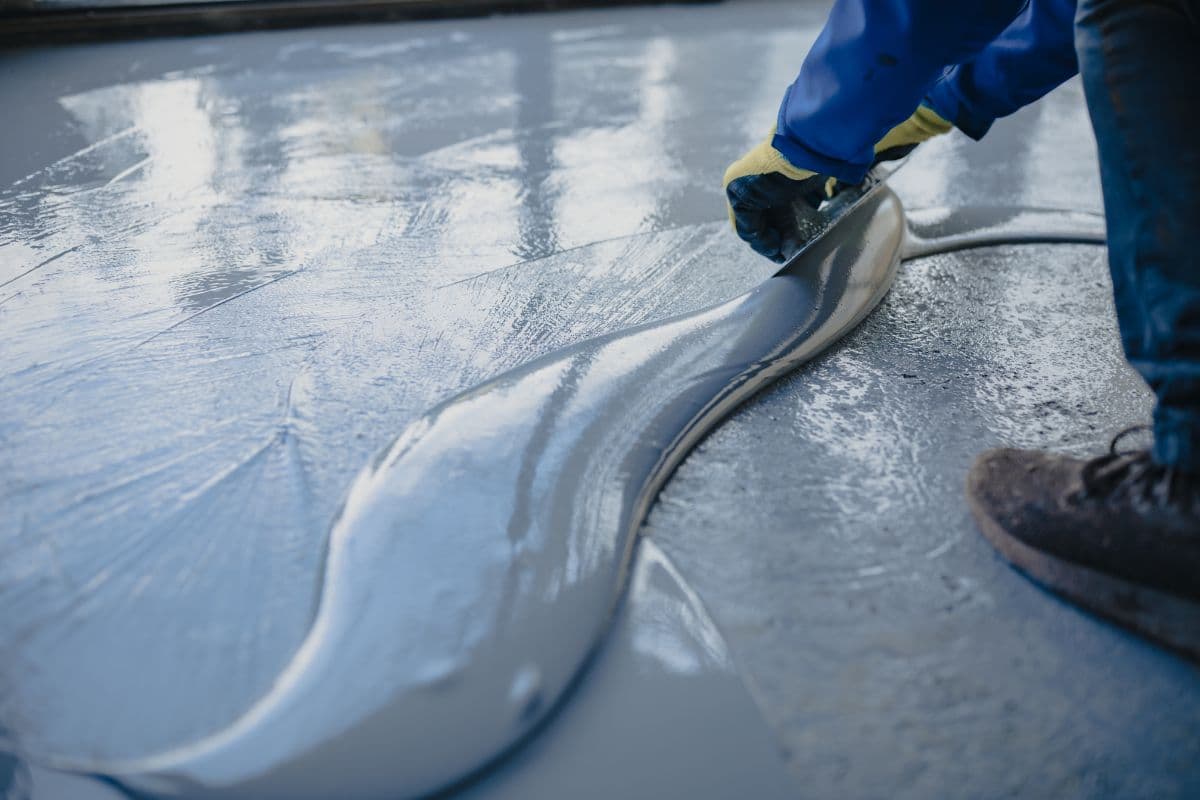
A professionally installed epoxy garage floor costs $3 to $12 per square foot, or $1,500 to $5,000 for a standard two-car garage. A DIY epoxy kit costs $100 to $300 for the same garage but lasts 2 to 5 years compared to 10 to 20 years for professional installation. The national average for a professional job on a two-car garage is approximately $2,500. The real question isn't just “how much does epoxy cost.” It's whether DIY saves you money or costs you more in the long run. This guide breaks down every cost for both paths, explains what drives the price difference, and helps you decide which approach is right for your garage.
The Real Cost Comparison
This is the table nobody else publishes honestly. It includes the hidden costs and failure rates that change the math.
| Factor | DIY | Professional |
|---|---|---|
| Materials (2-car garage, 450 sq ft) | $100 – $300 kit | $600 – $2,000 commercial-grade materials |
| Tools and supplies | $50 – $150 (roller, brush, tape, etching solution) | Included in labor |
| Surface prep (grinding/etching) | $0 (manual acid etch) to $200 (rented grinder) | Included (diamond grinding to proper profile) |
| Labor | Your time: 12 – 20 hours over 2–4 days | Included ($1 – $7/sq ft) |
| Total upfront cost | $150 – $650 | $1,500 – $5,000 |
| Expected lifespan | 2 – 5 years | 10 – 20 years |
| Failure rate | High (improper prep causes peeling in 30–50% of DIY jobs) | Low (less than 5% with reputable installers) |
| Warranty | None | 5 – 15 years (varies by installer) |
| Cost per year of life (2-car garage) | $50 – $200/year | $100 – $250/year |
| Hot tire pickup resistance | Low (water-based epoxy softens under heat) | High (commercial coatings resist tire heat) |
The math that matters: A $200 DIY kit that lasts 3 years costs $67 per year. A $2,500 professional job that lasts 15 years costs $167 per year. The annual cost difference is $100. But if the DIY job fails in 18 months (which happens frequently), you've spent $200 on a kit plus $200 to $400 to strip the failed coating before trying again or hiring a pro anyway. The professional job suddenly looks like the cheaper option.
Cost by Garage Size
| Garage Size | Square Feet | DIY Kit Cost | Professional Cost |
|---|---|---|---|
| 1-car garage | 200 – 250 sq ft | $75 – $200 | $800 – $2,500 |
| 1.5-car garage | 300 – 350 sq ft | $100 – $250 | $1,200 – $3,500 |
| 2-car garage | 400 – 500 sq ft | $150 – $350 | $1,500 – $5,000 |
| 3-car garage | 600 – 750 sq ft | $250 – $500 | $2,500 – $7,500 |
| Oversized/workshop | 800+ sq ft | $350 – $700 | $3,500 – $10,000 |
Larger garages cost less per square foot for professional installation because the fixed costs (mobilization, prep equipment, crew time) are spread across more area.
Cost by Epoxy Type
The type of coating you choose determines both the price and how long the floor lasts.
| Coating Type | Cost/Sq Ft (Materials) | Cost/Sq Ft (Installed) | Lifespan | Best For |
|---|---|---|---|---|
| Water-based epoxy | $0.50 – $2 | $3 – $5 | 2 – 5 yrs | Light-use garages, budget projects |
| Solvent-based epoxy | $1 – $3 | $4 – $7 | 5 – 10 yrs | Moderate-use garages |
| 100% solids epoxy | $2 – $5 | $5 – $10 | 10 – 20 yrs | High-traffic, heavy use, workshops |
| Polyaspartic coating | $3 – $7 | $6 – $12 | 15 – 20 yrs | Premium finish, one-day install |
| Metallic epoxy | $3 – $7 | $8 – $15 | 10 – 20 yrs | Showroom look, decorative finish |
What most DIY kits actually are: The $100 to $300 kits at Home Depot and Amazon are water-based epoxy. They're the thinnest, least durable type. They work for light-use garages where cars are parked but nothing heavy is dragged across the floor. They will not hold up in workshops, home gyms, or garages with heavy use.
What Drives the Cost Difference Between DIY and Pro
Surface Preparation: The #1 Factor
Surface prep is 80% of what determines whether an epoxy floor succeeds or fails. This is where the DIY vs professional gap is widest.
DIY approach: Most kits instruct you to acid etch the concrete. You spread a citric or muriatic acid solution, scrub it, rinse it, and let it dry. This creates a light surface profile that helps epoxy grip. The problem is that acid etching is inconsistent. It doesn't work well on previously sealed concrete, smooth-troweled finishes, or floors with moisture issues. If the concrete has any silicone, paint, oil, or sealer residue, the acid etch won't create adequate adhesion and the epoxy peels within months.
Professional approach: Professionals use diamond grinding machines that mechanically abrade the surface to a specific concrete surface profile (CSP 2 to 3). This method works on virtually any concrete regardless of its history. Diamond grinding is the industry standard recommended by the National Floor Covering Association and every major commercial epoxy manufacturer. It costs more because the equipment costs $5,000+ to own and $200+ per day to rent, but the adhesion it creates is dramatically superior to acid etching.
Moisture Testing
This is the hidden cost that separates a 15-year floor from an 18-month disaster. Concrete absorbs and releases moisture from the ground below. If the moisture vapor emission rate exceeds the epoxy manufacturer's threshold, the coating delaminates from underneath regardless of how well the surface was prepared.
Professional installers test for moisture using calcium chloride tests ($30 to $50 per test) or relative humidity probes ($100 to $150 per test). If moisture levels are too high, they apply a moisture mitigation primer ($2 to $4 per square foot) before the epoxy. DIY kits never mention moisture testing because it adds complexity and cost to the project. This is a major reason DIY floors fail.
Material Quality
Professional-grade 100% solids epoxy is 10 to 20 mils thick per coat. A water-based DIY kit lays down 2 to 4 mils. That's a 5x difference in coating thickness, which translates directly to durability and lifespan. Professional coatings also include UV-stable topcoats that prevent yellowing, anti-slip additives, and chemical resistance that water-based kits lack.
Hidden Costs to Budget For
| Item | Cost | Notes |
|---|---|---|
| Concrete crack repair | $25 – $250 | Both DIY and pro (depends on severity) |
| Oil stain removal/degreasing | $30 – $100 | Both (oil prevents adhesion) |
| Old coating removal | $1 – $3/sq ft | If previous paint or epoxy exists |
| Moisture mitigation primer | $2 – $4/sq ft | Floors with high moisture vapor |
| Decorative flake broadcast | $0.50 – $2/sq ft | Optional (most popular upgrade) |
| Anti-slip additive | $20 – $50 | Optional (recommended for wet climates) |
| Clear topcoat | $1 – $3/sq ft | Recommended for maximum durability |
| Garage clearing/prep | $0 (DIY) to $100–$200 (pro) | Moving everything out of the garage |
| Downtime | 2 – 4 days (DIY), 1 – 3 days (pro) | Can't park in garage during cure |
When DIY Makes Sense — And When It Doesn't
DIY is reasonable when: the garage is lightly used (parking only, no workshop activity), the concrete is in good condition (no major cracks, no previous coatings, no known moisture issues), you're comfortable with a 2 to 5 year lifespan before reapplication, and the budget is under $300.
Hire a professional when: you use the garage as a workshop, home gym, or hobby space with heavy foot and equipment traffic. You want the floor to last 10+ years without reapplication. The concrete has cracks, stains, previous coatings, or potential moisture issues. You're selling the home and want maximum curb appeal and buyer confidence. You want a premium finish (metallic, quartz, decorative flake).
How to Save Money on Professional Installation
- •Get three to five quotes. Epoxy flooring pricing varies dramatically between installers. A $3,000 quote and a $5,000 quote for the same garage are common. Multiple quotes help you find fair market pricing.
- •Ask what's included. A low quote that excludes concrete repair, moisture testing, and topcoat is not actually cheaper than a higher quote that includes everything. Get itemized quotes and compare the full scope of work.
- •Skip the metallic finish. Metallic epoxy is stunning but adds $2 to $5 per square foot over standard solid color or flake finishes. A standard flake broadcast over solid-color epoxy looks excellent and costs significantly less.
- •Time it with other garage work. If you're also replacing the garage door, upgrading lighting, or insulating, coordinating projects can reduce total mobilization costs.
- •Prep the garage yourself. Clear everything out of the garage before the crew arrives. Some installers charge $100 to $200 for garage clearing. Moving your own belongings saves that cost.
Frequently Asked Questions
How much does it cost to epoxy a 2-car garage floor?
A professional epoxy coating for a 2-car garage (400 to 500 square feet) costs $1,500 to $5,000, with the national average around $2,500. A DIY kit for the same space costs $150 to $350. The price varies based on epoxy type, surface condition, and whether decorative finishes are added.
Is epoxy garage floor worth the cost?
Yes, particularly professional installation. Epoxy protects concrete from oil stains, chemical damage, salt corrosion, and surface wear. It makes the garage dramatically easier to clean and improves the appearance significantly. Professional epoxy lasts 10 to 20 years, making the annual cost comparable to DIY when you factor in reapplication frequency.
How long does epoxy garage floor last?
DIY water-based epoxy lasts 2 to 5 years. Professional solvent-based or 100% solids epoxy lasts 10 to 20 years. Polyaspartic coatings (a premium alternative) last 15 to 20 years. Lifespan depends heavily on surface preparation quality, coating thickness, and garage usage.
Can I epoxy my garage floor myself?
Yes, but with realistic expectations. DIY epoxy kits work best on clean, crack-free concrete in lightly used garages. The most common failure point is inadequate surface preparation. If you acid etch instead of diamond grind, and skip moisture testing, the coating has a significantly higher chance of peeling within 1 to 3 years.
What is the difference between epoxy and polyaspartic?
Epoxy is a two-part resin coating that cures over 24 to 72 hours. Polyaspartic is a newer coating technology that cures in 2 to 6 hours, allowing same-day or next-day use. Polyaspartic is more UV-stable (won't yellow), more flexible, and more resistant to hot tire pickup. It costs 20% to 40% more than standard epoxy but offers a faster return to service and longer lifespan.
Does epoxy increase home value?
A professionally installed epoxy floor improves the appearance and perceived condition of the garage, which contributes to overall buyer impression. While there's no direct ROI study for epoxy floors specifically, the garage is increasingly viewed as functional living space, and a finished floor signals that the home has been well-maintained. Combined with a new garage door (268% ROI), a finished garage floor strengthens the overall package.
Glossary
100% solids epoxy
The highest-quality epoxy formulation with no water or solvent content. Lays down a thick, durable coating (10 to 20 mils per coat) that lasts 10 to 20 years. Used by professional installers. Not available in consumer DIY kits.
Water-based epoxy
The most affordable and widely available epoxy type, found in most DIY kits. Contains water as a carrier, resulting in a thinner coating (2 to 4 mils) with a shorter lifespan of 2 to 5 years.
Polyaspartic coating
A premium garage floor coating that cures faster than epoxy (2 to 6 hours vs 24 to 72 hours), resists UV yellowing, and handles hot tire pickup better. Costs 20% to 40% more than epoxy but offers superior long-term performance.
Concrete surface profile (CSP)
A numerical scale (1 to 9) that describes the roughness of a concrete surface after preparation. Epoxy coatings require CSP 2 to 3 for proper adhesion. Diamond grinding achieves this profile consistently. Acid etching achieves CSP 1 to 2, which is often insufficient.
Hot tire pickup
A common failure mode where hot tires (after driving) soften the floor coating and peel it away when the car is moved. Water-based epoxy is highly susceptible. Professional-grade coatings and polyaspartic systems resist hot tire pickup.
Diamond grinding
The professional method of preparing concrete for coating by mechanically abrading the surface with diamond-embedded tooling. Creates a consistent surface profile for maximum adhesion. Superior to acid etching for long-term coating performance.
Moisture vapor emission rate (MVER)
A measurement of how much moisture passes through a concrete slab from below. Tested using calcium chloride tests or relative humidity probes. High MVER causes coating delamination. Professional installers test for this before applying epoxy.
Decorative flake (chip) broadcast
Colored vinyl or acrylic flakes broadcast onto wet epoxy to create a textured, multi-colored finish. The most popular decorative option for garage floors. Adds texture for slip resistance and hides minor imperfections. Costs $0.50 to $2 per square foot additional.
Get Expert Garage Help
Connect with qualified garage professionals in your area. Free quotes, no obligation.