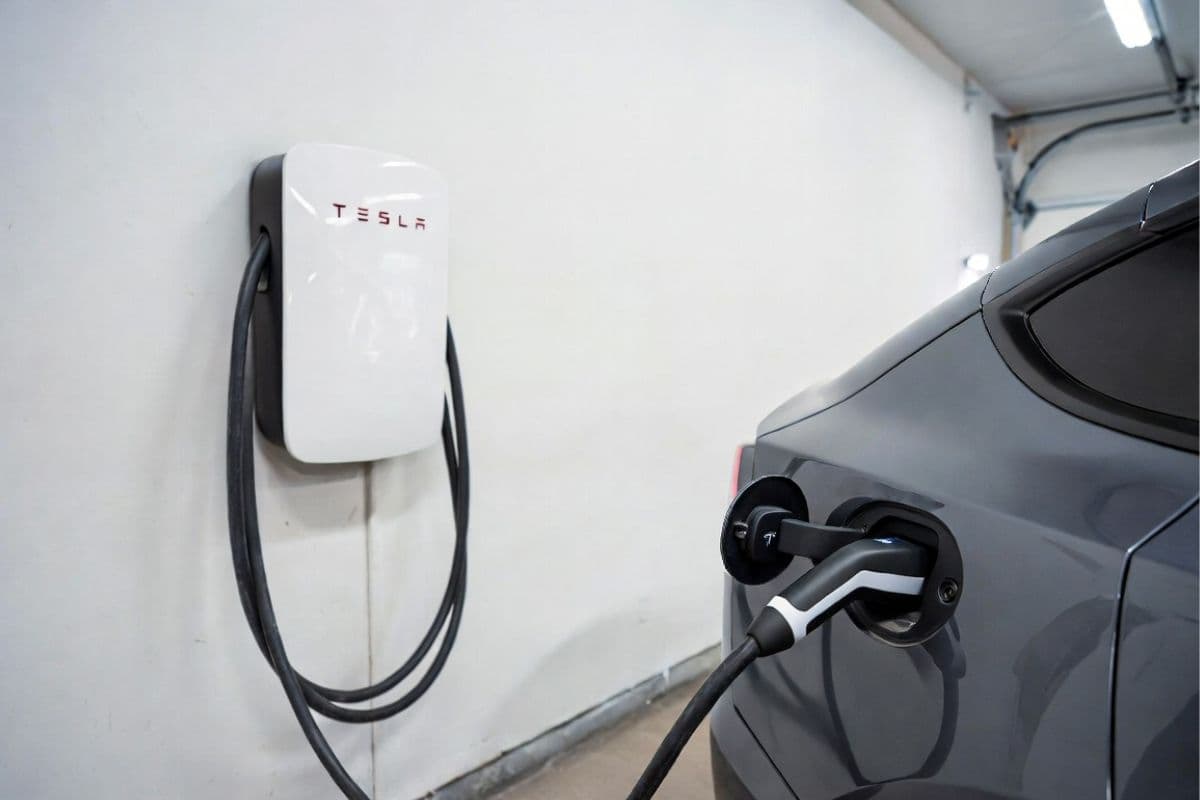
Quick answer: Installing a Level 2 EV charger at home costs $1,000 to $3,500 total, including the charger unit ($400 to $800) and professional electrical installation ($400 to $2,500). A Level 2 charger delivers 25 to 44 miles of range per hour, enough to fully charge most EVs overnight. The federal Section 30C tax credit covers 30 percent of equipment and installation costs up to $1,000 for qualifying residential installations, but expires June 30, 2026. Most installations take 2 to 4 hours and require an electrical permit.
A federal tax credit (Section 30C) currently covers 30% of equipment and installation costs up to $1,000 for qualifying residential installations, but this credit expires June 30, 2026. If you are considering a home charger, acting before that deadline reduces your out-of-pocket cost significantly.
This guide covers everything a homeowner needs to know: charging levels explained, electrical requirements, cost breakdowns, installation options, the federal tax credit, and how to prepare your garage for EV charging.
Charging Levels Explained
There are three levels of EV charging. Only Level 1 and Level 2 are practical for residential use.
| Feature | Level 1 | Level 2 | Level 3 (DC Fast) |
|---|---|---|---|
| Voltage | 120V (standard outlet) | 240V (dedicated circuit) | 480V |
| Amperage | 12 – 16 amps | 16 – 48 amps | 100 – 500 amps |
| Range added per hour | 3 – 5 miles | 25 – 44 miles | 180 – 240 miles |
| Full charge time (60 kWh) | 40 – 50 hours | 6 – 12 hours | 20 – 40 minutes |
| Equipment cost | $0 (included) | $400 – $800 | $20,000 – $100,000 |
| Installation cost | $0 (existing outlet) | $400 – $2,500 | Not residential |
| Best for | PHEVs, low mileage | Daily EV charging | Commercial/public only |
Level 1: The Included Charger
Every EV comes with a Level 1 charging cable that plugs into a standard 120V household outlet. It adds 3 to 5 miles of range per hour, which means a full charge of a 60 kWh battery takes 40 to 50 hours. Level 1 costs nothing to install because it uses an existing outlet.
Level 1 is sufficient if: You drive a plug-in hybrid (PHEV) with a small battery (8 to 18 kWh), your daily commute is under 30 miles, or you have a second vehicle and can tolerate slow charging.
Level 1 is not sufficient if: You drive a battery electric vehicle (BEV) with a large battery (60 to 100 kWh), your daily driving exceeds 40 miles, or you need to recover significant range in a single overnight session.
Level 2: The Home Charging Standard
Level 2 charging operates at 240V and delivers 25 to 44 miles of range per hour, depending on the charger's amperage and your vehicle's onboard charger capacity. A typical 48-amp Level 2 charger can fully charge a 60 kWh battery from near-empty in approximately 8 hours, making overnight charging practical for virtually any EV on the market.
Level 2 is the recommended setup for the vast majority of EV owners. It is the best balance of charging speed, installation cost, and electrical feasibility for residential use.
Level 3: Not for Homes
Level 3 DC fast charging requires 480V three-phase power, costs $20,000 to $100,000 per unit, and is not feasible for residential installation. These chargers are found at commercial charging stations and highway rest stops.
Electrical Requirements
Before purchasing a charger, your electrical system must be evaluated. This is the step that determines whether installation is simple and affordable or complex and expensive.
Panel Capacity
Your home's main electrical panel must have enough spare capacity to support a new 240V circuit. A 48-amp Level 2 charger requires a 60-amp breaker (the NEC requires the breaker to be rated at 125% of the charger's continuous load).
| Panel Size | Typical Capacity | Support Level 2? |
|---|---|---|
| 100 amp | Often limited after HVAC, range, dryer | Maybe – may require load management or upgrade |
| 150 amp | Usually sufficient for one Level 2 charger | Yes, in most cases |
| 200 amp | Ample capacity for Level 2 + all other loads | Yes |
| 400 amp | More than sufficient | Yes |
If your panel is at capacity: A panel upgrade ($1,000 to $3,000) increases total capacity. A load management device ($200 to $500) shares capacity between the charger and another large appliance, allowing both to exist on a panel that cannot run both simultaneously. Load management is significantly cheaper and accepted by most jurisdictions.
Circuit Requirements
| Charger Amperage | Required Breaker | Wire Gauge | Wire Cost/Ft |
|---|---|---|---|
| 24 amp (budget) | 30 amp | 10 AWG | $1 – $2 |
| 32 amp (mid-range) | 40 amp | 8 AWG | $2 – $3 |
| 40 amp (common) | 50 amp | 6 AWG | $3 – $5 |
| 48 amp (max residential) | 60 amp | 6 AWG copper / 4 AWG aluminum | $3 – $6 |
Wire run distance matters enormously. A 20-foot run from the panel to the charger location might cost $100 to $200 in wire. A 100-foot run to a detached garage could cost $500 to $1,000 in wire alone, before trenching and conduit. This is the single biggest variable in installation cost.
If your EV charger is in a detached garage that does not yet have adequate power, see our detached garage electrical guide for subpanel sizing and feeder run planning.
Plug-In vs. Hardwired
| Feature | Plug-In (NEMA 14-50) | Hardwired |
|---|---|---|
| Installation | Electrician installs 240V outlet, charger plugs in | Charger wired directly to circuit |
| Cost | Slightly lower (outlet install is standard) | Slightly higher (direct wiring) |
| Portability | Can unplug and take when moving | Permanently attached |
| Replacement | Swap charger without electrician | Electrician needed to disconnect |
| Outdoor use | Outlet must be GFCI-protected, weatherproof | Cleaner installation, no exposed outlet |
| Code compliance | Some jurisdictions require hardwired | Universally accepted |
Recommendation: For garage installations where you own the home, either option works well. Plug-in is more convenient if you might move or upgrade chargers. Hardwired is cleaner for outdoor installations and permanent setups.
Cost Breakdown
Total Installation Cost by Scenario
| Scenario | Charger Cost | Installation | Total |
|---|---|---|---|
| Simple: Panel in garage, existing capacity, short wire run | $400 – $600 | $300 – $800 | $700 – $1,400 |
| Moderate: Panel elsewhere, adequate capacity, medium run | $400 – $800 | $800 – $1,500 | $1,200 – $2,300 |
| Complex: Panel upgrade needed, long run, outdoor/detached | $400 – $800 | $1,500 – $3,500 | $1,900 – $4,300 |
Installation Cost Components
| Component | Cost Range | Notes |
|---|---|---|
| Charger unit (Level 2, 40–48 amp) | $400 – $800 | Smart chargers with Wi-Fi at higher end |
| Electrician labor (2–4 hours) | $200 – $600 | Rates vary $75–$150/hour by region |
| Wire and conduit (per linear foot) | $3 – $8 | Longer runs cost significantly more |
| New 240V breaker | $50 – $150 | Included in most quotes |
| Permit and inspection | $50 – $300 | Required in most jurisdictions |
| Panel upgrade (if needed) | $1,000 – $3,000 | Only if existing panel lacks capacity |
| Load management device | $200 – $500 | Alternative to panel upgrade |
| Trenching (detached garage/outdoor) | $300 – $2,000 | $5–$15/ft depending on surface |
| GFCI breaker (if required) | $40 – $100 | NEC 2020 requires for EV circuits in some areas |
The Federal Tax Credit (Section 30C)
The federal Alternative Fuel Vehicle Refueling Property Credit (Section 30C) provides a tax credit of 30% of equipment and installation costs, up to a maximum of $1,000 for residential installations. This credit applies to the charger itself plus all associated installation costs (wiring, panel work, labor, permits).
| Detail | Current Rule |
|---|---|
| Credit amount | 30% of total cost (equipment + installation), max $1,000 |
| Expiration | June 30, 2026 (charger must be placed in service by this date) |
| Eligibility | Primary residence in eligible census tract |
| How to claim | File IRS Form 8911 with your federal tax return |
| Refundable? | No – reduces tax owed, no refund beyond liability |
| Covers | Charger hardware, labor, panel upgrades, wiring, permits |
Important: The 30C credit was originally extended through December 2032 by the Inflation Reduction Act, but the One Big Beautiful Bill (enacted July 4, 2025) accelerated the expiration to June 30, 2026. Completing the project before this deadline saves up to $1,000.
Location eligibility: The credit is only available for installations in eligible census tracts (generally non-urban or low-income areas). Use the Department of Energy's 30C eligibility locator to check whether your address qualifies.
State and utility incentives: Many states and utility companies offer additional rebates of $200 to $1,000 for home EV charger installation. These stack with the federal credit. Check your state energy office and utility provider's website for current programs.
Connector Types: J1772 vs. NACS
The EV charging connector landscape is in transition. Understanding which connector your vehicle uses determines which charger to buy.
| Connector | Used By | Status |
|---|---|---|
| J1772 (SAE J1772) | Most non-Tesla EVs built before 2025 | Legacy standard, still widely supported |
| NACS (Tesla connector) | All Tesla + Ford, GM, Rivian, most new EVs from 2025 | Becoming the North American standard |
| CCS (Combined Charging System) | DC fast charging for J1772 vehicles | Public fast charging only, not for home use |
If you own a Tesla or a 2025+ model from Ford, GM, or Rivian, you likely need a NACS-compatible charger. If you own an older non-Tesla EV, you need a J1772 charger. Many current smart chargers support both connectors or include adapters. The Tesla Wall Connector ($450 to $580) natively supports NACS and includes a J1772 adapter option.
Future-proofing: The industry is converging on NACS as the North American standard. If buying a new charger in 2026, prioritize NACS compatibility or a charger with swappable connector options.
Where to Install Your Charger
Garage Installation (Recommended)
Installing the charger inside your garage is the simplest, cheapest, and most common approach. The garage provides weather protection for the charger and cable, keeps the installation out of sight, and is closest to where most homeowners park their EVs.
Optimal placement: Mount the charger on the wall near the front of the vehicle (where most charge ports are located) at a height of 42 to 48 inches. Position it so the cable reaches the charge port without stretching across walking paths or the vehicle hood.
Garage preparation: Before installation, ensure your garage has adequate lighting for nighttime plug-in, and consider your overall garage organization to ensure the charger location does not conflict with storage systems, workbenches, or vehicle door clearance.
Outdoor Installation
If your parking is outside the garage or you have a detached garage without easy electrical access, outdoor installation is necessary. Outdoor installations cost $200 to $1,000 more than indoor due to weatherproof enclosures, outdoor-rated conduit, and potentially longer wire runs.
- •Charger must be NEMA 4 or NEMA 3R rated (weatherproof)
- •Outlet (if plug-in) must be in a weatherproof enclosure with an in-use cover
- •All outdoor wiring must be in weatherproof conduit
- •GFCI protection is required
Detached Garage Installation
A detached garage adds the most cost due to the need to run power from the house panel to the garage. Options include underground trenching ($5 to $15 per linear foot) or overhead aerial cable. Most detached garage installations require a subpanel in the garage ($500 to $1,500) to distribute power locally.
Installation Process: What to Expect
Step 1: Electrical Assessment
An electrician evaluates your panel capacity, determines the wire route, and identifies any upgrades needed. Many electricians offer free assessments or include the cost in the installation quote.
Step 2: Permit Application
Most jurisdictions require an electrical permit for EV charger installation. Your electrician typically handles this. Permit costs range from $50 to $300. Processing takes 1 to 5 business days in most areas.
Step 3: Installation
The electrician installs the breaker, runs the wire, mounts the charger or outlet, and connects everything. Typical installation takes 2 to 4 hours for a straightforward garage install. Complex installations (panel upgrade, long run, trenching) may take a full day or require two visits.
Step 4: Inspection
A local building inspector verifies the installation meets code. This is typically included in the permit fee and scheduled within a few days of completion.
Step 5: Charger Setup
Connect the charger to Wi-Fi (if smart-enabled), download the manufacturer's app, and configure charging schedules. Most utilities offer lower electricity rates during off-peak hours (typically 9 PM to 6 AM), so scheduling overnight charging can save 30% to 50% on charging costs.
How Much Does It Cost to Charge an EV at Home?
Home charging costs a fraction of gasoline. At the national average residential electricity rate of approximately $0.16 per kWh, charging costs translate to roughly $0.04 to $0.06 per mile for most EVs.
| Vehicle | Battery Size | Cost to Full Charge | Equivalent MPG |
|---|---|---|---|
| Compact EV (Leaf, Bolt) | 40 – 66 kWh | $6.40 – $10.56 | 100 – 130 MPGe |
| Mid-size EV (Model 3, Ioniq 5) | 60 – 77 kWh | $9.60 – $12.32 | 90 – 120 MPGe |
| Full-size EV (Model X, F-150 Lightning) | 98 – 131 kWh | $15.68 – $20.96 | 60 – 90 MPGe |
$950
saved per year on fuel
18 mo
charger payback period
The average American drives 13,500 miles per year. At $0.05/mile for electricity versus $0.12/mile for gasoline ($3.50/gallon, 29 MPG average), an EV owner saves approximately $950 per year on fuel. A $1,500 charger installation pays for itself in roughly 18 months through fuel savings alone.
Frequently Asked Questions
Can I install a Level 2 charger myself?
Mounting the charger unit to the wall and plugging it into an existing outlet is DIY-friendly. However, installing the 240V circuit itself — running wire from the panel, installing a breaker, wiring the outlet — requires a licensed electrician in most jurisdictions. DIY electrical work on 240V circuits is dangerous, may void your homeowner's insurance, will fail inspection, and violates local code in most areas. The electrical portion typically takes a licensed electrician 2 to 4 hours and costs $200 to $600 in labor.
How long does EV charger installation take?
A straightforward garage installation with the panel nearby and available capacity takes 2 to 4 hours of electrician time. Installations requiring a panel upgrade, long wire runs, or trenching to a detached garage take 4 to 8 hours or may require two visits. The permit and inspection process adds 1 to 2 weeks to the overall timeline. The total elapsed time from hiring an electrician to a permitted, inspected, working installation is typically 2 to 4 weeks.
Do I need a permit to install an EV charger?
Almost always yes. Most jurisdictions require an electrical permit for any new 240V circuit installation. Your electrician typically handles the permit application and schedules the inspection, with costs ranging from $50 to $300. Installing without a permit creates liability at resale, may void homeowner's insurance for charger-related incidents, and can result in the installation being required to be brought up to code retroactively at your expense.
Will a Level 2 charger increase my electric bill?
Yes, but significantly less than you would spend on gasoline. Charging an average EV driving 13,500 miles per year adds approximately $50 to $70 per month at the national average rate of $0.16 per kWh, compared to $150 to $200 per month in gasoline for a comparable gas vehicle. Scheduling charging during off-peak hours (typically 9 PM to 6 AM) reduces the cost by 30 to 50 percent on time-of-use rate plans, bringing monthly charging costs down to $25 to $50 for most households.
Should I get a 32-amp or 48-amp charger?
Buy a 48-amp charger if your panel and budget allow it. The price difference between a 32-amp and 48-amp charger is typically only $50 to $150, but the 48-amp unit delivers 25 to 50 percent faster charging. Even if your current EV cannot accept the full 48 amps, most new EVs from 2025 onward support 48-amp Level 2 charging. The 48-amp circuit requires heavier wire and a 60-amp breaker, adding $50 to $200 to the electrical cost — a modest premium for long-term future-proofing.
Can two EVs share one charger?
Yes. A single Level 2 charger can charge two vehicles sequentially overnight — one charges until full, then the other charges. This works for most households because the overnight window is more than enough for two full charges in sequence. If both vehicles need simultaneous charging, a second dedicated charger ($700 to $1,500 installed) or a dual-port smart charger with automatic load sharing is the solution.
Does a home EV charger add resale value?
Yes, increasingly so as EV adoption grows. A pre-installed Level 2 charger with a dedicated 240V circuit represents real infrastructure value that EV-owning buyers specifically look for. The circuit and panel capacity are the more valuable components — the charger unit can be upgraded, but the electrical infrastructure cannot be easily replicated. Homes with existing EV infrastructure are increasingly listed as a selling feature in high-EV-adoption markets.
Is the federal tax credit still available?
The Section 30C credit — 30 percent of equipment and installation costs up to $1,000 — is available for chargers placed in service through June 30, 2026 in eligible census tracts. After that date, no federal residential charger credit exists under current law. The credit is non-refundable and claimed by filing IRS Form 8911 with your federal tax return. Check the Department of Energy's 30C eligibility locator to confirm your address qualifies before counting on this credit.
Glossary
EVSE (Electric Vehicle Supply Equipment)
The technical term for what is commonly called an EV charger. EVSE includes the charger unit, the cable, the connector that plugs into the vehicle, and all associated control electronics. The term is used in electrical codes, permit applications, and manufacturer documentation. Residential Level 2 EVSE requires a dedicated 240V circuit installed by a licensed electrician in most jurisdictions.
NACS (North American Charging Standard)
The charging connector originally developed by Tesla and adopted as the North American industry standard for new EVs starting in 2025. Major automakers including Ford, GM, Rivian, Honda, and Nissan have committed to NACS for new vehicle production. NACS connectors handle both AC Level 2 and DC fast charging through a single port. If your EV was manufactured after 2024 by most major brands, it likely uses NACS.
J1772 (SAE J1772)
The previous standard Level 1 and Level 2 AC charging connector used by non-Tesla EVs from approximately 2010 through 2024. Still in use on many vehicles currently on the road and widely supported by public charging infrastructure. J1772 chargers are fully compatible with NACS vehicles through a simple adapter included with most new EVs. If you own a non-Tesla EV manufactured before 2025, your vehicle likely uses J1772.
NEMA 14-50
A 240V, 50-amp receptacle outlet commonly used for plug-in Level 2 EV chargers, as well as electric ranges and RV hookups. The NEMA 14-50 is a four-prong outlet that provides two hot wires, a neutral, and a ground. Installing a NEMA 14-50 outlet allows the charger to be plugged in and unplugged rather than hardwired permanently. Installing one costs $150 to $400 in electrician labor and materials.
Load Management Device
An electrical device that monitors total household electrical load and automatically reduces the EV charger's output when other large appliances are drawing power simultaneously. A load management device allows a Level 2 charger to coexist on a panel that cannot support both the charger and other heavy loads — at a cost of $200 to $500 — rather than requiring a full panel upgrade at $1,000 to $3,000. Also called a smart load management system or energy management system.
NEC (National Electrical Code)
The standard for safe electrical design, installation, and inspection published by the National Fire Protection Association and adopted as law by most US jurisdictions. Article 625 of the NEC specifically covers electric vehicle charging system equipment. The NEC requires EV charger circuits to be rated at 125 percent of the charger's continuous load — meaning a 48-amp charger requires a 60-amp breaker. The NEC is updated every three years; the 2020 edition added GFCI protection requirements for EV circuits in some configurations.
Section 30C
The section of the US Tax Code that provides the Alternative Fuel Vehicle Refueling Property Credit. Under current law it provides a tax credit of 30 percent of equipment and installation costs up to $1,000 for qualifying residential EV charger installations. The credit applies to the charger hardware, labor, wiring, panel work, and permit costs. It is non-refundable and currently expires June 30, 2026 for residential installations.
Time-of-Use Rate
A utility electricity pricing structure that charges different rates depending on the time of day. Off-peak rates — typically between 9 PM and 6 AM on weekdays — are 30 to 50 percent lower than on-peak daytime rates. Enrolling in a time-of-use rate plan and scheduling your EV charger to charge overnight can reduce annual charging costs by $150 to $300 compared to unmanaged daytime charging. Most smart Level 2 chargers include scheduling features that automate off-peak charging.
Related Guides
Garage Heater Guide 2026
Types, BTU sizing, costs, and installation for heating your garage.
ReviewBest Garage Lighting 2026
LED options for every budget to ensure adequate lighting for EV charging.
GuideComplete Garage Organization Guide 2026
Plan your garage layout to accommodate EV charging alongside storage.
ComparisonAttached vs Detached Garage 2026
How garage type affects EV charger installation cost and complexity.
Cost GuideGarage Conversion Cost 2026
Turn your garage into living space — including electrical planning.
GuideHow to Insulate Your Garage
Insulation helps regulate temperature for both your EV and garage space.
GuideComplete Garage Guide 2026
Every garage system covered in one place — structure, doors, flooring, heating, electrical, safety, and maintenance.
Cost GuideGarage Addition Cost 2026
How much it costs to build a new garage — by size, type, and every cost factor.
Get Expert Garage Help
Connect with qualified garage professionals in your area. Free quotes, no obligation.