The Garage Guide
Updated Mar 2026 · 20 min read
How to Insulate Your Garage Complete DIY Guide
What to insulate first, which materials to use, the R-values you need for your climate, and the step-by-step process for each area.
Insulating a garage costs $0.50 to $3.00 per square foot for materials (DIY) or $1.50 to $5.00 per square foot professionally installed. For a standard 2-car garage, expect $300 to $1,500 in materials for a complete DIY job covering walls, ceiling, and door. The most effective approach for most homeowners is fiberglass batts in the walls ($0.50 to $1.50/sq ft), fiberglass or blown-in insulation in the ceiling ($0.80 to $2.00/sq ft), and a garage door insulation kit ($50 to $200).
If your garage is attached to your house, insulation isn't just about comfort. It's about energy bills. An uninsulated attached garage acts as a heat sink in winter and a heat source in summer, forcing your HVAC system to work harder to maintain temperature in adjacent rooms. According to the Department of Energy, properly insulating the boundary between your garage and living space can reduce energy loss through that wall by 60 to 70 percent.
This guide covers what to insulate first, which materials to use, the R-values you need for your climate, and the step-by-step process for each area.
What to Insulate First (Priority Order)
Not every surface in your garage matters equally. Focus your budget and effort on the areas that deliver the biggest return first.
| Priority | Area | Why It Matters | Typical Cost (DIY) |
|---|---|---|---|
| 1 | Shared wall with house | Largest source of energy loss to living space | $100 - $300 |
| 2 | Ceiling (if room above) | Heat rises — uninsulated ceiling loses heat to room above or attic | $200 - $600 |
| 3 | Garage door | Largest surface area and usually zero insulation | $50 - $200 |
| 4 | Exterior walls | Exposed to outside temps, important for conditioned garages | $150 - $500 |
| 5 | Floor | Least impactful for most garages unless converting to living space | $200 - $800 |
If your garage is detached, skip priority 1 and focus on the ceiling, door, and exterior walls.
R-Values You Need by Climate Zone
The Department of Energy recommends different insulation levels depending on where you live. Use this table to find the right R-value for your garage.
| Climate Zone | Region Examples | Walls (Shared + Exterior) | Ceiling | Garage Door |
|---|---|---|---|---|
| 1-2 (Hot) | South FL, TX coast, HI | R-11 to R-13 | R-30 | R-6 to R-8 |
| 3-4 (Mixed) | NC, TN, CA, OK, VA | R-13 to R-15 | R-38 | R-8 to R-10 |
| 5-6 (Cold) | NY, OH, PA, CO, WA | R-15 to R-21 | R-49 | R-10 to R-13 |
| 7 (Very Cold) | MN, WI, ME, MT, AK | R-21+ | R-49 to R-60 | R-13+ |
You can find your exact climate zone on the IECC Climate Zone Map. When in doubt, go with the higher R-value. Over-insulating costs a little more upfront but saves energy for the life of the home.
Insulation Materials Comparison
Each insulation type has tradeoffs between cost, performance, and ease of installation. Here is a side-by-side comparison of every common option.
| Material | R-Value per Inch | Cost per Sq Ft | DIY? | Best For |
|---|---|---|---|---|
| Fiberglass batts | R-3.2 to R-3.8 | $0.50 - $1.50 | Yes | Walls with open studs |
| Rigid foam (XPS) | R-5.0 | $0.75 - $2.00 | Yes | Garage doors, masonry walls |
| Rigid foam (polyiso) | R-6.0 to R-6.5 | $0.80 - $2.50 | Yes | Max R-value in thin profile |
| Blown-in cellulose | R-3.5 to R-3.7 | $0.80 - $1.50 | Moderate | Finished walls and ceilings |
| Spray foam (open cell) | R-3.5 to R-3.7 | $1.00 - $2.50 | Hire a pro | Air sealing, irregular cavities |
| Spray foam (closed cell) | R-6.0 to R-6.5 | $2.00 - $5.00 | Hire a pro | Max performance, moisture barrier |
| Radiant barrier foil | Reflects radiant heat | $0.25 - $0.75 | Yes | Hot climates, garage doors |
For most DIY homeowners, fiberglass batts offer the best combination of low cost, easy installation, and solid performance. If you want the highest R-value per inch and a built-in moisture barrier, closed-cell spray foam is the premium choice but requires professional installation.
How to Insulate Garage Walls (Step by Step)
Fiberglass batts are the most common DIY choice for garage walls. This process assumes your walls have exposed studs (no drywall). If the walls are already finished, skip to the blown-in cellulose option below.
What You Need
- Fiberglass batts (R-13 for 2x4 walls, R-19 or R-21 for 2x6 walls)
- Utility knife
- Tape measure
- Staple gun and staples
- Expanding foam sealant (for gaps and penetrations)
- Vapor barrier / polyethylene sheeting (cold climates, zones 5-7)
- Safety glasses, work gloves, long sleeves, dust mask
Step 1: Inspect and Prep the Walls
Check for moisture, mold, and structural damage. Repair any issues before insulating. Identify all electrical wiring, junction boxes, plumbing, and vents. Use expanding foam to seal any holes or gaps where air can pass through the wall (sill plate, around pipes, behind electrical boxes).
Step 2: Measure the Cavities
Measure the width and height of each stud cavity. Standard stud spacing is 16 inches on center, which means the cavity is about 14.5 inches wide. Batts are sold in 15-inch and 23-inch widths to fit 16-inch and 24-inch stud spacing. Cut batts 1 inch longer than the cavity height for a snug friction fit.
Step 3: Install the Batts
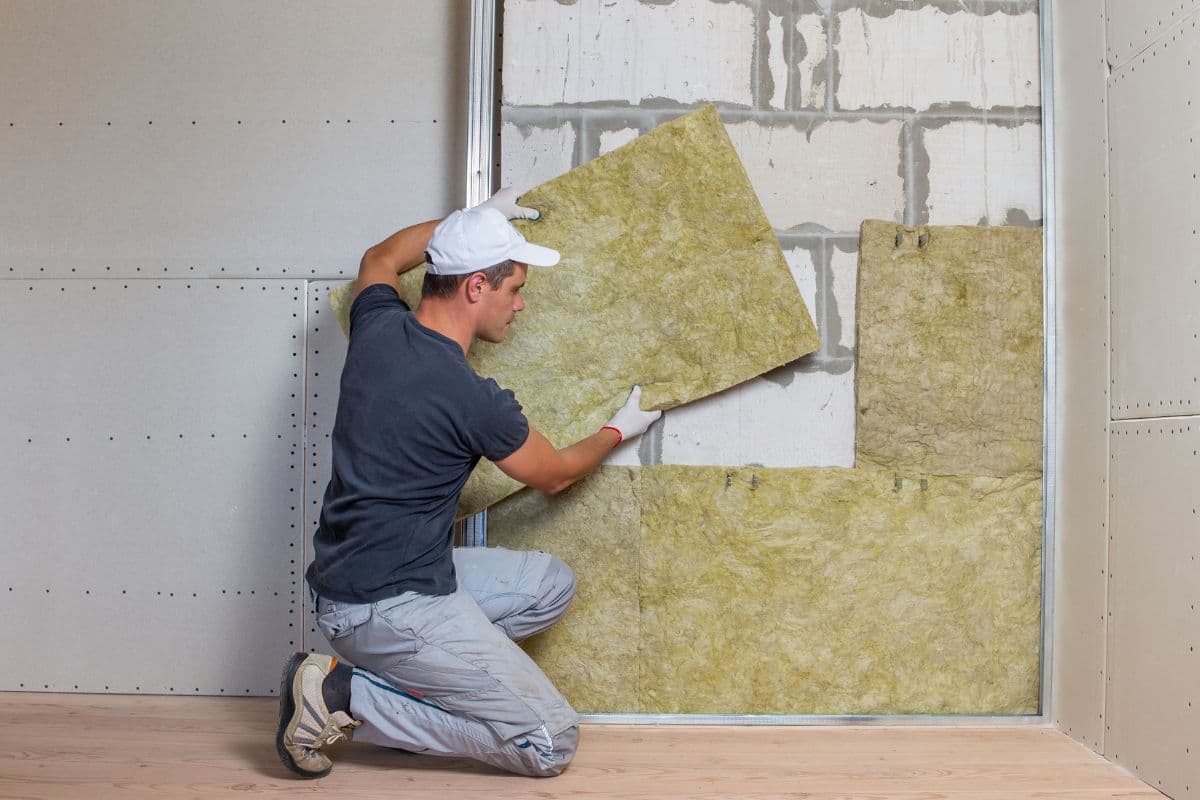
Press each batt into the cavity between studs. The batt should fill the cavity completely with no gaps, voids, or compression. If using faced batts (with a paper or foil vapor retarder), the facing goes toward the warm side of the wall (toward the garage interior in cold climates). Split batts around electrical wires by peeling the batt into two layers and tucking one behind the wire and one in front.
Step 4: Seal Around Penetrations
Use expanding foam sealant around electrical boxes, pipes, and any holes that pass through the wall. Even small gaps allow air leakage that reduces insulation performance significantly.
Step 5: Install Vapor Barrier (If Required)
In cold climates (zones 5-7), staple a 6-mil polyethylene vapor barrier over the insulated wall. Overlap seams by 12 inches and seal with housewrap tape. The vapor barrier goes on the warm side (interior face of the studs). In hot or mixed climates (zones 1-4), a vapor barrier is generally not needed on garage walls. Check your local building code.
Step 6: Cover with Drywall
Most building codes require exposed insulation on garage walls to be covered with 1/2-inch drywall or another fire-rated barrier. This is especially important on the wall shared with the house (fire separation requirement). Check your local code for specific requirements.
Dense fiberglass or mineral wool insulation in the wall cavity also provides meaningful sound reduction, which matters if you use your garage as a workshop or music space. For a complete approach to garage noise reduction including mass-loaded vinyl and decoupling techniques, see our garage soundproofing guide.
How to Insulate the Garage Ceiling
Insulating the garage ceiling is critical if there is a room above (bedroom, bonus room, home office). Even if there is just an attic above, ceiling insulation keeps heat from escaping upward in winter and blocks attic heat from radiating down in summer.
Option 1: Fiberglass Batts (Exposed Joists)
If the ceiling joists are exposed, install fiberglass batts between them just like walls. Use R-30 to R-38 batts for standard joist depths. Friction-fit the batts and secure with wire supports or staples to prevent sagging. Install a vapor barrier on the warm side if required by your climate zone.
Option 2: Blown-in Insulation (Finished Ceiling)
If the ceiling already has drywall, blown-in cellulose or fiberglass is the best option. Drill 2-inch holes between each joist bay, blow insulation to the target R-value, and patch the holes. Many home improvement stores rent blowing machines free when you buy a minimum amount of insulation.
Option 3: Spray Foam (Premium)
Closed-cell spray foam on the ceiling provides the highest performance. It seals air leaks, prevents moisture issues, and delivers R-6 to R-6.5 per inch. This requires professional installation and costs $2.00 to $5.00 per square foot, but it is the best option for rooms above the garage where temperature control is critical.
How to Insulate the Garage Door
The garage door is typically the largest uninsulated surface in the garage. Even basic insulation on the door can make a noticeable difference in temperature. There are two main approaches.
Option 1: Garage Door Insulation Kit ($50 - $200)
Pre-cut foam panels designed to fit standard garage door panels. Most kits use polystyrene or polyisocyanurate foam and include adhesive retainer clips. Installation takes 1 to 2 hours. Provides R-4 to R-8 depending on the kit and foam thickness. This is the easiest and most cost-effective option for most homeowners.
Option 2: Custom Rigid Foam Board
Cut rigid foam board (XPS or polyiso) to fit each door panel. Measure the recessed area of each panel, cut the foam slightly oversized for a friction fit, and press into place. Use adhesive for extra hold if needed. This approach lets you choose higher R-value foam and is often cheaper than a kit if you already have foam on hand.
Weatherstripping the Garage Door
Insulating the door panels is only half the job. Replace worn bottom seals and side weatherstripping to stop air infiltration around the door edges. A new bottom seal costs $15 to $40 and takes 30 minutes to install. Side and top weatherstripping costs $20 to $50 for a complete kit.
Weight Considerations
Adding insulation increases the weight of the garage door. For most single-layer steel doors, a foam insulation kit adds 15 to 30 pounds. This usually does not require a spring adjustment. However, if the door feels heavy or does not stay open at the halfway point, have a garage door technician adjust the spring tension. Never attempt to adjust torsion springs yourself.
Common Insulation Mistakes to Avoid
Compressing insulation
Squeezing a batt to fit a smaller space reduces its R-value. A compressed R-19 batt can drop to R-13 or less. Always use the correct batt size for the cavity.
Leaving gaps and voids
A 5 percent gap in insulation coverage can reduce the effective R-value of the entire wall by 25 percent or more. Fill every cavity completely.
Skipping air sealing
Insulation slows heat transfer but does not stop air movement. Seal all gaps, cracks, and penetrations with expanding foam or caulk before insulating.
Vapor barrier on the wrong side
The vapor barrier always goes on the warm side. In cold climates, that is the interior face. Installing it on the wrong side traps moisture in the wall cavity and causes mold and rot.
Not covering insulation with drywall
Most building codes require exposed fiberglass insulation in a garage to be covered with a fire-rated material. Exposed insulation is also a fire hazard and degrades over time from UV and physical damage.
Total Cost to Insulate a Garage
| Area | DIY Cost (2-Car Garage) | Professional Cost |
|---|---|---|
| Walls (fiberglass batts) | $150 - $500 | $500 - $1,500 |
| Ceiling (fiberglass/blown-in) | $200 - $600 | $600 - $2,000 |
| Garage door (kit or foam) | $50 - $200 | $150 - $400 |
| Weatherstripping | $35 - $90 | $100 - $250 |
| Total | $435 - $1,390 | $1,350 - $4,150 |
These estimates are for a standard 2-car garage (approximately 400 to 576 square feet of floor space). Actual costs vary based on your region, insulation type, and whether the walls and ceiling are already finished.
Frequently Asked Questions
How much does it cost to insulate a garage?
DIY materials for a 2-car garage cost $300 to $1,500 depending on insulation type and areas covered. Professional installation costs $800 to $5,000. Fiberglass batts are the most affordable option ($0.50 to $1.50 per square foot). Spray foam is the most expensive ($2.00 to $5.00 per square foot) but provides the highest performance.
Is it worth insulating a garage?
Yes, especially if the garage is attached to your house. Insulating the shared wall and ceiling (if there is a room above) directly reduces your home heating and cooling costs. If you use the garage as a workshop, home gym, or hobby space, insulation makes the space usable year-round.
What is the best insulation for a garage?
Fiberglass batts are the best choice for most DIY homeowners due to low cost, wide availability, and easy installation. For maximum performance, closed-cell spray foam provides the highest R-value per inch and acts as a moisture and air barrier. For garage doors, rigid foam board or a pre-made insulation kit is the best option.
Should I insulate my garage if it is not heated?
Yes, if it is attached to your house. Even without heating the garage, insulation prevents the garage from becoming a cold or hot zone that affects adjacent living spaces. If the garage is detached and unheated, insulation is less critical but still helps protect stored items from temperature extremes and condensation.
Do I need a vapor barrier in my garage?
In cold climates (zones 5-7), yes. A vapor barrier on the warm side of the insulation prevents moisture from condensing inside the wall cavity. In hot or mixed climates (zones 1-4), a vapor barrier is generally not required on garage walls, but check your local building code.
Can I insulate my garage myself?
Yes for fiberglass batts, rigid foam, and garage door insulation kits. These are all standard DIY projects requiring basic tools and 1 to 2 days of work. Spray foam insulation should be installed by a professional due to the specialized equipment, safety requirements, and precision needed.