The Garage Guide
Updated Apr 2026 · 11 min read
NEMA 14-50 Outlet Installation Cost 2026: Garage EV Charging Circuit Prices
Full breakdown by wire run length, panel situation, outlet type, and DIY vs professional.
TL;DR
A NEMA 14-50 outlet installed in a garage costs $300 to $800 for a straightforward job where the panel is nearby and has capacity. Add $100 to $300 for longer wire runs. Add $800 to $2,500 if the panel needs a breaker slot or capacity upgrade. The outlet hardware itself costs $15 to $50. Labor is where the cost lives: most electricians charge $75 to $150 per hour and this job takes 2 to 4 hours for a standard garage install. The NEMA 14-50 is the most widely compatible outlet for home EV charging but it is not always the best choice. A NEMA 6-50 costs slightly less to install and works for most dedicated EV chargers. Hardwired installation costs more upfront but is required by some local codes for chargers above 40 amps and eliminates the outlet connection point entirely.
You bought an electric vehicle or you are about to. You know you need a 240-volt outlet in the garage. Your phone says NEMA 14-50. Your electrician quoted $450. Your neighbor paid $1,200. The Tesla forums say someone got it done for $300.
Every one of those numbers is correct for a different job. A 10-foot wire run from a panel with open slots costs $300 to $450. A 60-foot run through finished walls to a panel that needs a new circuit breaker costs $800 to $1,200. A job requiring a panel capacity upgrade before any outlet work can begin costs $1,500 to $3,500.
This guide tells you which job you have and what it will actually cost.
The Wire Run Rule
The single variable that controls NEMA 14-50 installation cost more than any other is wire run length: every additional foot of wire between your electrical panel and the outlet adds $6 to $12 in materials and labor.
Before calling an electrician, measure or estimate the distance from your main panel (or garage subpanel if you have one) to where you want the outlet. Measure the actual wire path, not the straight-line distance. Wire follows walls, runs through ceilings, and travels through conduit. A garage that is 20 feet from the panel often requires 40 to 60 feet of wire.
- Short run (under 20 feet): $300 to $500 total
- Medium run (20 to 50 feet): $500 to $800 total
- Long run (50 to 100 feet): $800 to $1,200 total
- Very long run (over 100 feet): $1,000 to $1,500 total (may require wire gauge upgrade)
These figures assume the panel has capacity for a new 50-amp double-pole circuit breaker and at least one open slot.
Critical Safety Requirement
A NEMA 14-50 outlet requires a dedicated 50-amp double-pole circuit breaker and 6 AWG copper wire (or 4 AWG for runs over 50 feet). It cannot share a circuit with any other load. If your panel is full or does not have sufficient capacity, the panel must be addressed before the outlet can be installed. Never install a 50-amp outlet on a circuit with undersized wire or a shared breaker. This is a code violation and a fire hazard.
Outlet Type Comparison: NEMA 14-50 vs NEMA 6-50 vs Hardwired
Most homeowners searching for "NEMA 14-50 installation cost" do not realize there are three viable options for a home EV charging circuit. The right choice depends on which charger you own or plan to buy, your local code requirements, and how you plan to use the outlet in the future.
| Outlet Type | Wiring | Compatible With | Installation Cost | Best For |
|---|---|---|---|---|
| NEMA 14-50 | 2 hot, 1 neutral, 1 ground (4-wire) | Most portable EV chargers, RVs, ranges | $300 to $1,000 | Maximum flexibility, multiple charger brands |
| NEMA 6-50 | 2 hot, 1 ground (3-wire) | Many dedicated EV chargers, welders | $250 to $900 | Slightly lower cost, EV-only dedicated circuit |
| Hardwired (no outlet) | Direct wire connection | Specific wall-mounted charger only | $400 to $1,200 | Permanent installation, high-amperage chargers |
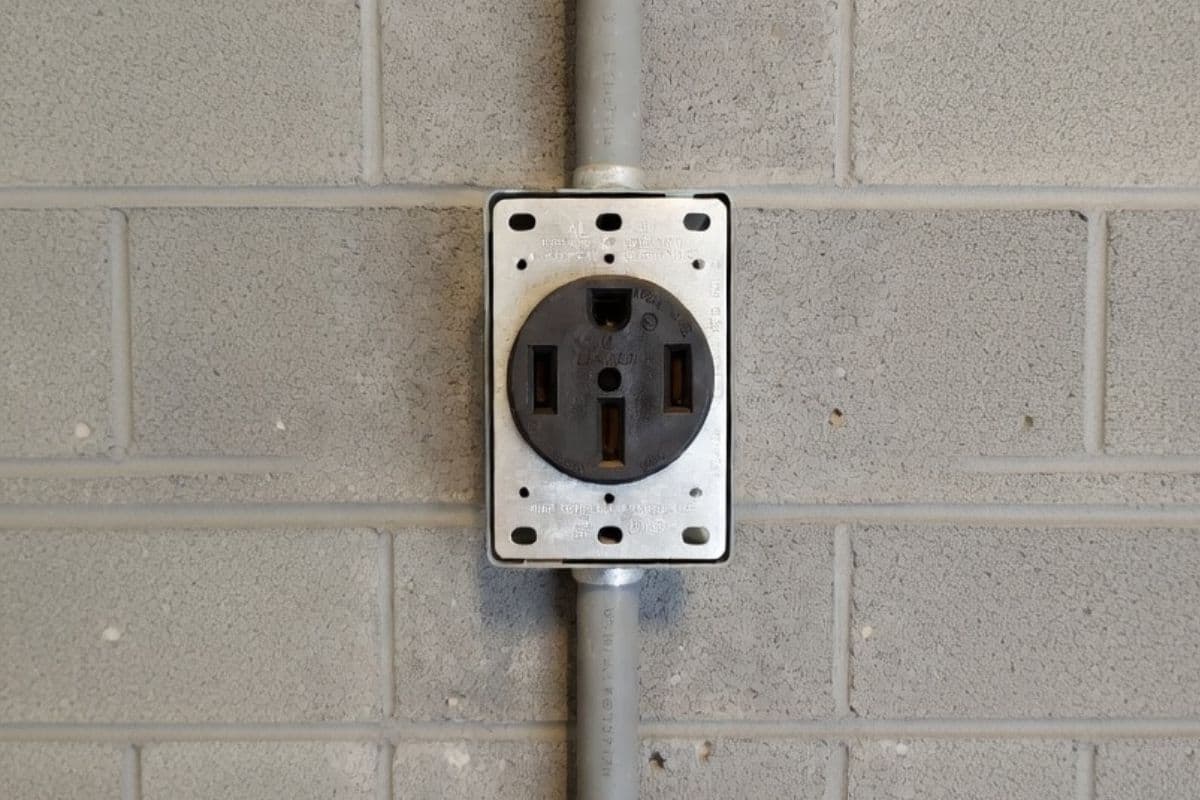
NEMA 14-50: The most widely compatible outlet for home EV charging. The four-wire design (two hot, one neutral, one ground) makes it usable with virtually every portable EV charger on the market, RV hookups, electric ranges, and other 240-volt appliances. If you want one outlet that works with any charger you might buy in the future, NEMA 14-50 is the right choice. The neutral wire adds a small amount of material cost compared to NEMA 6-50 but the installation process is essentially identical.
NEMA 6-50: A three-wire outlet (two hot, one ground, no neutral) that costs slightly less to install because it omits the neutral wire and conduit fill is smaller. Works with most dedicated EV chargers including many ChargePoint, Clipper Creek, and JuiceBox models that ship with a 6-50 plug. Does not work with appliances that require a neutral (ranges, dryers). If you are installing a circuit specifically and only for EV charging and your charger supports it, NEMA 6-50 is a reasonable choice that saves $25 to $75 in materials.
Hardwired installation: The charger connects directly to the circuit without an outlet or plug. Required by some local jurisdictions for chargers delivering over 40 amps continuous load. Eliminates the outlet connection point, which is the component most likely to degrade from repeated plugging and unplugging over years of daily use. Costs more than outlet-only installation because it includes the charger hardware in the scope of work. If you ever need to move or replace the charger, an electrician is required.
Cost Breakdown: What You Are Actually Paying For
| Cost Component | Typical Range | Notes |
|---|---|---|
| NEMA 14-50 outlet (hardware) | $15 to $50 | Industrial-grade outlets cost more and last longer |
| 50-amp double-pole circuit breaker | $25 to $60 | Must match your panel brand |
| 6 AWG copper wire | $3 to $6 per foot | 4 AWG required for runs over 50 feet |
| Conduit (if required) | $1 to $3 per foot | Required in many garages by local code |
| Electrician labor | $75 to $150 per hour | 2 to 4 hours for standard install |
| Permit | $50 to $200 | Required in most jurisdictions |
| Inspection fee | $50 to $150 | Often included in permit fee |
Total for a standard job (20 to 30 foot run, panel has capacity):
- Materials: $150 to $300
- Labor: $150 to $450
- Permit: $50 to $200
Total: $350 to $950
When Panel Work Is Required
The most significant cost variable after wire run length is whether your electrical panel has capacity for the new circuit. A NEMA 14-50 circuit requires a 50-amp double-pole breaker, which occupies two slots in the panel.
Panel has open slots and sufficient capacity: No additional work needed. The electrician adds a 50-amp breaker and runs wire to the outlet. This is the standard job in the $300 to $800 range.
Panel has no open slots but sufficient capacity: The electrician may be able to use a tandem breaker to free up slots without a full panel replacement. Adds $100 to $300 to the job.
Panel is at or near capacity (older 100-amp panel or overloaded 200-amp panel): A load calculation is required to determine whether a new circuit can be added safely. If the panel is near its capacity limit, a subpanel in the garage may be the right solution. A 60-amp or 100-amp garage subpanel costs $500 to $1,500 installed and provides multiple slots for the EV circuit plus room for future circuits (lighting, workshop tools, additional EV charger). See our detached garage electrical guide for subpanel details.
Panel requires full replacement or upgrade: An older 100-amp service panel being upgraded to 200-amp service costs $1,500 to $3,500 including permits and inspection. This is a separate project from the NEMA 14-50 installation itself, though both can be scheduled with the same electrician.
| Panel Situation | Additional Cost | Total Installed Cost |
|---|---|---|
| Panel has open slots, sufficient capacity | $0 | $300 to $800 |
| No open slots, tandem breaker solution | $100 to $300 | $400 to $1,100 |
| Garage subpanel needed | $500 to $1,500 | $800 to $2,300 |
| Full panel upgrade (100A to 200A) | $1,500 to $3,500 | $1,800 to $4,300 |
Wire Gauge and Run Length Requirements
The National Electrical Code requires wire sizing based on the amperage of the circuit and the length of the run. Getting this wrong is both a code violation and a fire hazard.
Standard NEMA 14-50 circuit (50-amp breaker):
- Runs up to 50 feet: 6 AWG copper wire
- Runs 50 to 100 feet: 4 AWG copper wire (to compensate for voltage drop)
- Runs over 100 feet: consult an electrician, as this may require 3 AWG or a different approach
Why wire gauge matters for EV charging: A Level 2 EV charger on a 50-amp circuit draws 40 amps continuously (80 percent of circuit capacity per NEC rules). At 40 continuous amps, undersized wire generates heat. Undersized wire on a high-draw continuous load is the most common cause of EV charging circuit fires. Never accept an installation using 8 AWG wire on a 50-amp circuit.
Conduit requirements: Most garages require wire to run through conduit (metal or PVC) when it passes through the garage interior. Conduit adds material cost but protects the wire from physical damage and is required by code in most jurisdictions when wire is exposed rather than run inside wall cavities.
Permits and Inspections
A NEMA 14-50 installation is electrical work that requires a permit in virtually every jurisdiction in the United States. The permit fee is $50 to $200 depending on location. An inspection follows the installation, typically within 1 to 2 weeks of the permit being pulled.
Why permits matter for EV charging circuits specifically:
An uninspected EV charging circuit creates two problems. First, insurance companies have denied claims on EV charging fires that occurred on unpermitted circuits. Second, if you sell your home, the unpermitted circuit must be disclosed and may require retroactive inspection or removal.
A licensed electrician pulls the permit as part of the job. If an electrician suggests skipping the permit to save money, decline and find another contractor. The permit and inspection exist precisely because EV charging circuits are high-draw continuous loads where an undersized connection or loose terminal becomes a fire risk over time.
Federal tax credit note: The federal Alternative Fuel Vehicle Refueling Property Credit (Section 30C, Form 8911) covers 30 percent of EV charging equipment and installation costs, up to $1,000 for residential installations. Three things every homeowner needs to know before counting on this credit:
First, the credit expires June 30, 2026. The One Big Beautiful Bill Act moved the termination date up from December 2032. Any charger or outlet installation placed in service after June 30, 2026 does not qualify. If you are planning an installation, timing matters.
Second, the credit has a census tract requirement. Your property must be in a qualifying low-income or non-urban census tract per IRS guidance. Most rural and many suburban properties qualify. Urban installations may not. Check your address against the IRS census tract eligibility tool before assuming you qualify.
Third, the credit is non-refundable. It reduces your federal tax liability dollar for dollar but cannot generate a refund. If you owe $400 in federal taxes and your calculated credit is $1,000, you save $400 and lose the remaining $600 permanently. The credit is only as valuable as your actual tax bill for that year.
Both the outlet installation cost and the charger hardware cost are eligible expenses. Keep all receipts and have your electrician provide an itemized invoice. See our EV charger installation cost guide for more on the federal tax credit.
DIY vs Professional Installation
Installing a NEMA 14-50 outlet is not a recommended DIY project for most homeowners. Here is an honest assessment:
The code reality: In most jurisdictions, electrical work above a certain scope requires a licensed electrician and a permit. Installing a new 240-volt circuit from the panel typically falls within this scope. Unpermitted electrical work can void homeowners insurance for related claims and creates disclosure obligations when selling the home.
The safety reality: The combination of a continuous 40-amp load, 240-volt circuit, and a connection point that gets plugged and unplugged daily creates real risk if installed incorrectly. Loose terminals, undersized wire, and incorrect breaker sizing are the three most common installation errors, all of which generate heat over time.
When DIY is technically feasible: Homeowners with electrical experience who understand load calculations, wire sizing, conduit work, and permit processes can install a NEMA 14-50 outlet legally in many jurisdictions by pulling a homeowner permit. This requires pulling the permit yourself, doing the work to code, and passing the inspection. The material cost for a DIY job is $150 to $350. The risk of failing inspection and needing to redo work is real.
The honest recommendation: Hire a licensed electrician. The labor cost of $150 to $450 for a standard job is not large relative to the total cost of an EV and charger setup. The peace of mind of a permitted, inspected circuit that will not create a fire risk over years of daily use is worth it. For ongoing garage maintenance, include the EV circuit in your annual inspection checklist.
How to Get an Accurate Quote
EV charging circuit quotes vary enormously as the research forums show. Quotes for the same job ranging from $400 to $1,600 are not unusual. Here is how to get an accurate number:
Tell the electrician exactly:
- Distance from the panel to the outlet location (measured, not estimated)
- Whether walls between the panel and outlet are finished or open
- The panel brand and amperage
- How many open breaker slots the panel has
- Whether you want NEMA 14-50, NEMA 6-50, or hardwired
- The charger brand and model you plan to install
Ask the electrician specifically:
- Is the wire run exposed or through finished walls?
- What wire gauge will you use?
- Is conduit required by local code?
- Will you pull the permit?
- What is included in the quote: labor, materials, permit, inspection?
Get three quotes. The spread between responsible quotes on the same job is typically $200 to $400. A quote significantly below others may exclude permit fees or use undersized wire. A quote significantly above others may include unnecessary work like a panel upgrade that is not actually needed. If you are setting up a full garage workshop, discuss all planned circuits at once so the electrician can plan the panel load efficiently.
Frequently Asked Questions
How much does it cost to install a NEMA 14-50 outlet in a garage?
A NEMA 14-50 outlet installation in a garage costs $300 to $800 for a standard job where the electrical panel is nearby and has capacity for a new 50-amp circuit. Jobs requiring longer wire runs (50 to 100 feet) cost $800 to $1,200. Jobs requiring a panel upgrade or garage subpanel cost $1,500 to $3,500 in addition to the outlet installation. Get quotes from at least three licensed electricians with the specific details of your job before committing to any contractor.
What is the difference between NEMA 14-50 and NEMA 6-50?
Both are 240-volt, 50-amp outlets used for EV charging. The NEMA 14-50 has four wires (two hot, one neutral, one ground) making it compatible with virtually every portable EV charger as well as RVs and high-power appliances. The NEMA 6-50 has three wires (two hot, one ground, no neutral) and costs slightly less to install. It works with most dedicated EV chargers that support the 6-50 configuration. If you want maximum flexibility for future charger changes, choose NEMA 14-50. If you are installing a circuit specifically for one EV charger and want to minimize cost, NEMA 6-50 is a reasonable choice.
Can I install a NEMA 14-50 outlet myself?
In most jurisdictions, new 240-volt circuit installation requires a licensed electrician and a permit. Homeowners can legally pull a homeowner permit and do the work themselves in some areas, but this requires a solid understanding of electrical code, wire sizing, conduit requirements, and load calculations. The inspection must be passed before the circuit can be used. For most homeowners, hiring a licensed electrician is the safer and more practical choice. The labor cost of $150 to $450 for a standard job is modest relative to the total EV charging setup cost.
What wire gauge do I need for a NEMA 14-50 outlet?
A 50-amp NEMA 14-50 circuit requires 6 AWG copper wire for runs up to 50 feet. For runs between 50 and 100 feet, 4 AWG copper wire is required to prevent voltage drop under continuous 40-amp EV charging load. Never accept an installation using 8 AWG wire on a 50-amp circuit. This is undersized for continuous EV charging loads and creates a fire risk over time. Always confirm the wire gauge being installed before work begins.
Does a NEMA 14-50 installation require a permit?
Yes in virtually every jurisdiction in the United States. Installing a new 240-volt circuit from the electrical panel is electrical work that requires a permit and inspection in most areas. The permit fee is $50 to $200 depending on location. A licensed electrician pulls the permit as part of the job. Skipping the permit risks insurance claim denial for any related incident and creates disclosure obligations when selling the home.
How long does a NEMA 14-50 installation take?
A standard installation takes 2 to 4 hours for a licensed electrician. Jobs with longer wire runs, finished walls requiring wire fishing, or conduit installation take longer. The permit and inspection process adds 1 to 2 weeks to the overall timeline before the circuit can be used. Schedule accordingly if you are planning around an EV delivery date.
Should I get a NEMA 14-50 outlet or hardwire my EV charger?
A NEMA 14-50 outlet offers more flexibility. You can swap chargers without calling an electrician, use the outlet for an RV or other 240-volt equipment, and take the charger with you if you move. Hardwired installation is required by some local codes for chargers delivering over 40 amps continuous and eliminates the outlet connection point that can degrade over years of daily plugging. For most residential installations under 40 amps, a NEMA 14-50 outlet is the practical and code-compliant choice. For higher-amperage installations or if local code requires it, hardwired is the correct approach.
Will a NEMA 14-50 outlet work with my EV?
The NEMA 14-50 is a wall outlet, not a charger. You still need a Level 2 EV charger (EVSE) that has a NEMA 14-50 plug or a portable charging cable that terminates in a NEMA 14-50 plug. Most EV manufacturers sell or include a portable charging cable with a NEMA 14-50 plug. Most aftermarket Level 2 chargers also support NEMA 14-50. Confirm that your specific charger has a NEMA 14-50 plug or can be configured for one before having the outlet installed.
Related Guides
EV Charger Installation Cost
Full cost breakdown for Level 2 EV charger installation including hardware.
GuideDetached Garage Electrical
Running a new circuit to a detached garage for EV charging.
ProblemGarage Door Opener Not Working
Electrical troubleshooting for garage circuits.
GuideGarage Maintenance Checklist
Annual electrical inspection items for garage circuits.
GuideGarage Workshop Setup
Planning dedicated circuits for a garage with multiple high-draw loads.
Glossary
NEMA 14-50
A standardized 240-volt, 50-amp electrical outlet with four conductors: two hot wires, one neutral wire, and one ground wire. The most widely compatible outlet for home EV charging. Also used for RV hookups and electric ranges. Requires a 50-amp double-pole circuit breaker and 6 AWG copper wire for runs up to 50 feet.
NEMA 6-50
A standardized 240-volt, 50-amp electrical outlet with three conductors: two hot wires and one ground wire. No neutral wire. Used for welding equipment, some EV chargers, and other 240-volt-only loads. Slightly less expensive to install than NEMA 14-50 due to the simpler three-wire configuration. Not compatible with appliances that require a neutral.
Double-pole circuit breaker
A circuit breaker that occupies two slots in the electrical panel and controls a 240-volt circuit by interrupting both hot legs simultaneously. A 50-amp double-pole breaker is required for a NEMA 14-50 or NEMA 6-50 circuit. Costs $25 to $60 depending on panel brand and amperage rating.
6 AWG wire
The wire gauge required for a 50-amp, 240-volt circuit run up to 50 feet. AWG (American Wire Gauge) is an inverse scale where lower numbers indicate thicker wire. 6 AWG copper wire costs $3 to $6 per foot. For runs over 50 feet, 4 AWG wire is required to prevent voltage drop under continuous 40-amp EV charging loads.
Voltage drop
The reduction in voltage that occurs over the length of a wire due to the wire's resistance. On a 50-amp EV charging circuit drawing 40 continuous amps, excessive voltage drop caused by undersized wire or a very long run reduces charging speed and generates heat in the wire. The NEC recommends limiting voltage drop to 3 percent for branch circuits, which drives the wire gauge requirement for longer runs.
Subpanel
A secondary electrical panel fed from the main panel that provides additional circuit capacity in a remote location such as a detached garage. A 60-amp or 100-amp garage subpanel costs $500 to $1,500 installed and provides multiple circuit slots for an EV charging circuit, lighting, and other loads without requiring a full main panel upgrade.
EVSE (Electric Vehicle Supply Equipment)
The technical term for what most people call a Level 2 charger or EV charger. The EVSE is the hardware that manages the electrical connection between the 240-volt circuit and the vehicle, communicating with the car to control charging rate and provide safety monitoring. The NEMA 14-50 outlet is the electrical connection point. The EVSE is the separate piece of hardware that plugs into it.
Homeowner permit
A building permit pulled by the homeowner rather than a licensed contractor, available in many jurisdictions for certain types of residential electrical work. Allows homeowners to legally perform their own electrical work on their primary residence, subject to inspection. Requirements vary significantly by state and municipality. Some areas allow homeowner permits for new circuit installation; others require a licensed electrician for all panel work.
Continuous load
An electrical load that runs for 3 or more hours at a time. The NEC requires continuous loads to be limited to 80 percent of circuit capacity. EV charging is a continuous load, which is why a 50-amp circuit supports a maximum 40-amp charging rate. This 80 percent rule also determines the minimum wire gauge and breaker sizing for the circuit.